Practical guide
Planning a trip to Sri Lanka
The useful parts first: when to go, how to enter, money, health, safety, phones and how to get around. Rules change, so treat the official links as the last word.
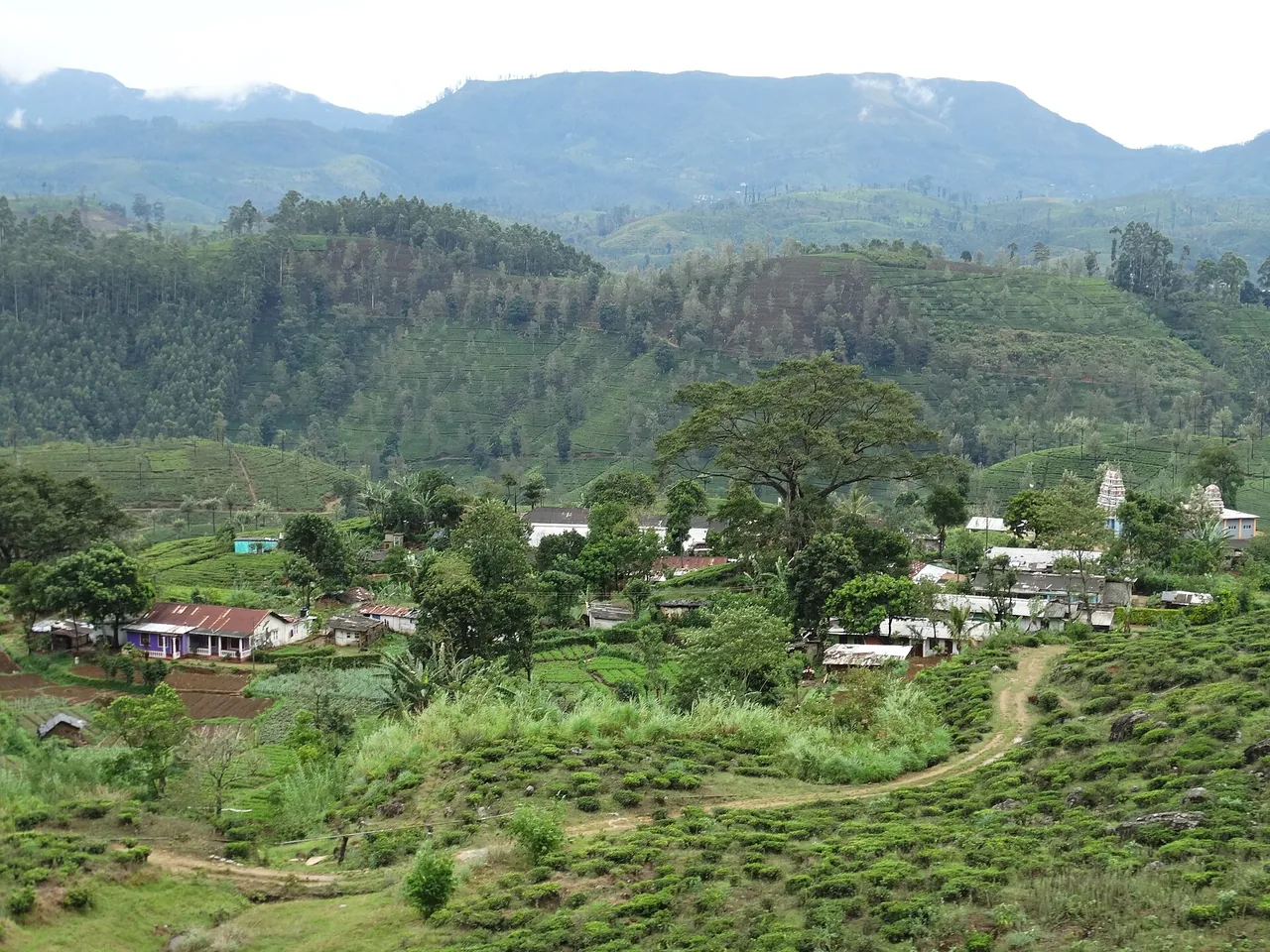
Scenery on the hill-country railway between Ella and Kandy. Photo: Adam Jones, CC BY-SA 2.0
Home / Planning a trip to Sri Lanka
When to go
Sri Lanka does not have one island-wide “best month”. Rainfall is regional. The Department of Meteorology describes four broad seasons: a first inter-monsoon in March and April, the south-west monsoon from May to September, a second inter-monsoon in October and November, and the north-east monsoon from December to February. The south-west monsoon is typically wetter on the south-western coast and the windward slopes of the hills; the north-east monsoon is typically wetter in the north and east.
Sri Lanka Tourism makes the same practical point: plan around the weather in the region you will actually visit, and check forecasts close to departure, because heavy rain can affect roads. A common planning pattern is this: the south and west coasts (Galle, Unawatuna, Mirissa, Negombo) are often more workable from about December to March; the east coast (Trincomalee, Nilaveli, Arugam Bay) is often more workable from about May to September. The hill country and the Cultural Triangle can be visited year-round, with cooler nights in the highlands and a higher chance of afternoon storms in the inter-monsoon months.
The UK Foreign, Commonwealth & Development Office, in advice still current on 29 November 2026 and updated on 21 September 2026, noted that heavy rainfall in the inter-monsoon season had increased the risk of flooding and landslides, with possible disruption to transport. Check your own government’s travel advice before you go, and follow local authorities if weather warnings are in force. Sri Lanka Tourism’s 24-hour hotline is 1912.
Visas and entry
As of the official ETA notices checked on 29 November 2026, all foreign nationals must obtain an Electronic Travel Authorization before arrival, including travellers who qualify for a free tourist ETA. Apply only through the official site, eta.gov.lk. Do not pay a third-party site that merely forwards the same form.
From 25 May 2026, nationals of 40 listed countries — including Sweden, the United Kingdom, the United States, Canada, Australia, China, India, Japan, Germany, France and others named on the official page — can obtain a tourist ETA free of charge for 30 days. Maldives, Seychelles and Singapore are also processed free of charge under bilateral arrangements; Maldivian nationals receive 90 days. The free visa is described as having a double-entry facility within its validity, counted from first arrival. If you want to stay longer than 30 days, you may apply for an extension and pay the applicable fee.
Nationals of countries not on that list remain subject to the general ETA rules and fees. Travellers from a short list of countries (including Cameroon, Nigeria, Côte d’Ivoire, Ghana, Afghanistan, Syria, and applicants from Taiwan-China and Kosovo, as set out in the official alerts) may need to apply through a Sri Lankan sponsor at the Department of Immigration and Emigration in Battaramulla, rather than only through the website. Check the official notices for your nationality.
At the border, Immigration still expects a passport valid for at least six months from the date of arrival, a confirmed return or onward ticket, and enough funds for the stay. Keep a copy of your ETA approval. Sri Lanka Tourism also points you to Customs for allowances and to the official passenger guidance if you are carrying currency, medicines, professional equipment or anything that might need a declaration.
Money
The currency is the Sri Lankan rupee (LKR). Sri Lanka Tourism and the Central Bank advise exchanging money through licensed banks or authorised money changers, and keeping the receipts. The Central Bank has repeatedly warned the public about unauthorised foreign-currency dealing; look for an authorised dealer rather than an informal offer.
Cards are widely used in hotels, larger restaurants and shops in cities; cash is still useful for smaller purchases, markets, some buses and places outside the main tourist circuit. Carry a mix, tell your card issuer you are travelling, and inspect ATMs for tampering. Customs has separate rules for declaring foreign currency and for Sri Lankan rupees on departure — check the official passenger guide rather than assuming a single threshold.
Health
Speak to a travel-health clinician about your own itinerary before you go. This page is not medical advice. The U.S. Centers for Disease Control and Prevention recommends that most travellers to Sri Lanka consider hepatitis A and typhoid vaccination, be up to date on routine vaccines including measles (MMR), and discuss rabies: dogs infected with rabies are commonly found in Sri Lanka, and post-exposure vaccines are not always readily available. Yellow fever vaccine is not recommended because of Sri Lanka itself, but Sri Lanka requires it for travellers aged 9 months and over arriving from a country with risk of yellow-fever transmission, including airport transits of more than 12 hours. Check the CDC Yellow Fever page and the official entry rules if your route is not a direct flight.
Dengue is a risk. Use repellent, cover up at dawn and dusk, and sleep under a net or in screened or air-conditioned rooms when you can. Sri Lanka was certified malaria-free by the World Health Organization in 2016; still confirm current advice with your clinician and the Epidemiology Unit, especially if your trip includes rural or forest time. Drink sealed or treated water when you are unsure, and be careful with ice, unpeeled fruit and food that has sat out in the heat. Arrange travel insurance that covers treatment and evacuation. The ambulance number listed by Sri Lanka Tourism is 1990.
Safety
Check the travel advice issued for your own nationality. The UK FCDO advice current on 29 November 2026 asked travellers to take the usual precautions: stay aware in busy stations, markets and tourist areas, keep money and documents secure, agree transport terms before you set off, and avoid demonstrations. No part of the island is described here as uniformly “safe” or “unsafe”.
At Buddhist temples, cover shoulders and legs, remove shoes and hats where required, and be careful how you pose around images of the Buddha. Ask before photographing people. Sri Lanka Tourism also notes that filming and drones can need prior approval. If something is stolen, report it to the police and keep a copy of the report for insurance.
Phones and SIM cards
The two largest operators are Dialog and SLT-Mobitel; Airtel also operates. Tourist SIM or eSIM packages are commonly sold at Bandaranaike International Airport and in town. We are not listing prices or data allowances here, because they change. Buy from the operator’s official counter or website, and keep the passport you used to register the SIM. Coverage is generally good in cities and along main roads, and can thin out in parks and some hill and northern stretches.
Getting there and getting around
Most long-haul visitors arrive at Bandaranaike International Airport (CMB) at Katunayake, north of Colombo and close to Negombo — not in the city centre. Confirm the airport on your ticket; Colombo also has Ratmalana (RML), which is not the usual intercontinental gateway. Airport and Aviation Services publishes passenger information for CMB. Pre-book a hotel transfer, or use the airport taxi desk, a ride-hailing app where it operates, or the airport bus into Colombo, and agree the fare or confirm the meter before you leave the kerb.
Sri Lanka Railways runs the national train network. The hill-country line through Kandy, Nanu Oya (for Nuwara Eliya) and Ella is the journey many visitors plan a trip around; the coastal line from Colombo to Galle is also useful. Look up times on the official schedule search and book reserved seats on the official reservation site, especially in peak season. Do not rely on a screenshot of an old timetable. Buses are cheaper and denser; they can be crowded and fast. Many visitors hire a driver with a car for part of the trip, which is often the simplest way to link the Cultural Triangle, the hills and the south, but it is a cost to compare, not a requirement.
Tuk-tuks are everywhere in towns. Agree the fare before you start, or use a metered or app-based ride where one is offered. Distances on the map look short; hill roads, traffic in Colombo and evening storms can stretch a “three-hour” transfer.
A note on this guide
Sri Lanka Explained is a researched editorial guide, not a trip diary. Suggested itineraries are routes that fit the geography and the seasons, not a record of a journey we have taken. Where a personal view appears, it is labelled as a reflection. Always re-check visas, park openings, train seats and weather with the official source before you book.
Sources
- Official ETA application
- Department of Immigration and Emigration
- Travel Tips
- Climate of Sri Lanka
- Sri Lanka traveller health
- Foreign travel advice: Sri Lanka
- Central Bank of Sri Lanka
- Unauthorised foreign currency dealings (use authorised dealers)
- Sri Lanka Railways
- Official seat reservation
- Official train schedule search
- Airport and Aviation Services (Sri Lanka)
- Epidemiology Unit
Last checked 29 November 2026. Opening hours, tickets, visas, park closures and weather change; confirm with the source before you rely on it.